
Palladium Price Forecast: 2026 and Long-Term Outlook
Prepared by the Libertex team
Content reviewed internally in accordance with regulatory standards.
Palladium (Pd) is a platinum group metal primarily used in automotive catalytic converters, which account for approximately 80% of global demand. After reaching an all-time high near $3,339 per troy ounce in March 2022 on the back of a multi-year supply deficit, palladium entered a prolonged correction and trades near $1,270–$1,300 per troy ounce as of 22.09.2026. For investors and automotive industry stakeholders, understanding what drives palladium's price – and where it may be heading – remains as relevant as ever.
This article presents palladium price forecasts for 2026 and 2027 from WalletInvestor and Kursprognose, a long-term projection through 2030 from CoinPriceForecast, and a full technical analysis reading from Investing. Palladium is also available for CFD trading through Libertex, a user-friendly, award-winning Stock and CFD Broker operating since 2012, without the need to hold the physical metal.
The sections below cover palladium's short- and long-term price projections, the key supply and demand drivers shaping its outlook, a technical analysis summary, and answers to the most common investor questions.
Key Takeaways
- WalletInvestor projects palladium to close December 2026 at approximately $1,300, representing a decline of around 29.7% from the February 2026 opening price of $1,848.
- Kursprognose forecasts palladium in a range of $1,149–$1,909 for 2026, with a projected year-end close near $1,486 — a change of approximately -18.3% from the February 2026 opening price of $1,818.
- For 2027, WalletInvestor projects a sharp recovery to a year-end close near $2,586, representing a gain of roughly 92.7% from the January 2027 opening, driven by renewed demand dynamics and supply-side tightening.
- CoinPriceForecast projects a steady long-term recovery, with palladium expected to reach approximately $2,766 per ounce by year-end 2030 – implying a gain of more than 110% from current levels.
- Catalytic converter demand, which accounts for roughly 80% of global palladium consumption, remains the single most important price driver, while electric vehicle adoption – at below 20% of new car sales in most major markets – poses a longer-term structural headwind rather than an immediate demand threat.
Recent Updates
- Palladium is trading near $1,305 per troy ounce as of late September 2026, having declined significantly from its year-to-date high of approximately $1,869 reached in February 2026. The metal has faced persistent selling pressure through mid-year, reflecting subdued automotive demand and easing supply concerns.
- Supply concentration remains a market risk: Russia (Nornickel) and South Africa together account for more than 80% of global primary palladium production. Ongoing Western sanctions on Russia and energy disruptions affecting South African mines continue to embed a geopolitical risk premium into pricing.
- Global ICE vehicle sales in major emerging markets – India, Southeast Asia, and Latin America – continue to outpace BEV adoption, supporting near-term catalytic converter demand and partially offsetting the EV narrative overhang.
Current Palladium Price
Palladium Price Forecast 2026: WalletInvestor
WalletInvestor's palladium forecast for the remainder of 2026 shows a broadly sideways-to-lower trajectory from a September level near $1,338 to a December close of approximately $1,300, representing a full-year decline of around 29.7% from the February opening price of $1,848. Price swings remain moderate, with a projected monthly range low near $1,230 and a high near $1,525 across the remaining months.
| Month | Opening Price (USD) | Closing Price (USD) | Min. Price (USD) | Max. Price (USD) | Change (%) |
| September 2026 | 1,338.12 | 1,338.12 | 1,338.12 | 1,338.12 | 0 % |
| October 2026 | 1,324.12 | 1,248.13 | 1,230.32 | 1,374.55 | -6.73 % |
| November 2026 | 1,289.13 | 1,320.76 | 1,277.17 | 1,524.65 | 5.82 % |
| December 2026 | 1,299.56 | 1,299.62 | 1,251.21 | 1,377.67 | -1.6 % |
Source: WalletInvestor (22.09.2026)
Palladium Price Forecast 2026 – Kursprognose
Kursprognose projects palladium in a range of $1,149–$1,909 across 2026, with a December close near $1,486, implying a decline of approximately 18.3% relative to the February opening price of $1,818. Month-to-month price swings reflect the metal's historically elevated volatility, with the widest projected range expected in the October–November window.
| Month | Min. – Max. (USD) | Close (USD) | Total (%) |
| September 2026 | 1,257 – 1,443 | 1,323 | -4.1 % |
| October 2026 | 1,149 – 1,423 | 1,327 | -3.8 % |
| November 2026 | 1,327 – 1,479 | 1,409 | 2.1 % |
| December 2026 | 1,409 – 1,560 | 1,486 | 7.7 % |
Source: Kursprognose (22.09.2026)
Palladium Price Forecast 2027: WalletInvestor
WalletInvestor's 2027 palladium forecast opens with a decline in January of approximately 8.3% and a further drop of around 3.9% in February, before continued weakness persists through mid-year. A dramatic recovery materialises in the final quarter, driving the year-end closing price to approximately $2,586 – a gain of roughly 92.7% from the January 2027 opening of $1,342. The steepest single-month loss is projected for July, at approximately –14.1%.
| Month | Opening Price (USD) | Closing Price (USD) | Min. Price (USD) | Max. Price (USD) | Change (%) |
| January 2027 | 1,341.95 | 1,192.38 | 1,134.3 | 1,361.42 | -8.25 % |
| February 2027 | 1,190.45 | 1,146.14 | 1,110.8 | 1,244.99 | -3.88 % |
| March 2027 | 1,143.08 | 1,174.17 | 1,143.08 | 1,277 | 2.45 % |
| April 2027 | 1,203.03 | 1,153.95 | 1,070.19 | 1,227.36 | -1.72 % |
| May 2027 | 1,130.47 | 1,077.46 | 1,077.46 | 1,227.93 | -6.63 % |
| June 2027 | 1,095.25 | 1,083.16 | 1,052.11 | 1,195.04 | 0.53 % |
| July 2027 | 1,091.27 | 930.67 | 916.89 | 1,091.27 | -14.08 % |
| August 2027 | 961.83 | 1,112.63 | 944.22 | 1,112.63 | 19.55 % |
| September 2027 | 1,149.4 | 1,199.97 | 1,145.69 | 1,235.1 | 7.85 % |
| October 2027 | 2,356.61 | 2,432.24 | 2,285.91 | 2,505.21 | 3.21 % |
| November 2027 | 2,434.76 | 2,507.88 | 2,339.81 | 2,605.69 | 3 % |
| December 2027 | 2,510.4 | 2,586.04 | 2,442.62 | 2,655.86 | 3.01 % |
Source: WalletInvestor (22.09.2026)
Palladium Price Forecast 2027: Kursprognose
Palladium is the most volatile of the major platinum group metals. Its price reacts sharply to shifts in the automotive sector, geopolitical events affecting Russian or South African supply, and broader macroeconomic conditions. Consequently, forecasts from different analytical providers can diverge significantly – as illustrated by the two 2027 projections below.
Kursprognose projects a volatile but net-positive trajectory for palladium in 2027. The price edges up by approximately 1.0% in January to $1,394 before softening in February by 5.2% to $1,308. After reaching a projected peak near $1,706 in October, the price moderates slightly in November, closing December at approximately $1,699 – a year-on-year gain of around 23.1%.
| Month | Min. – Max. (USD) | Close (USD) | Total (%) |
| January 2027 | 1,324 – 1,486 | 1,394 | 1 % |
| February 2027 | 1,243 – 1,394 | 1,308 | -5.2 % |
| March 2027 | 1,283 – 1,419 | 1,351 | -2.1 % |
| April 2027 | 1,204 – 1,351 | 1,267 | -8.2 % |
| May 2027 | 1,267 – 1,413 | 1,346 | -2.5 % |
| June 2027 | 1,314 – 1,452 | 1,383 | 0.2 % |
| July 2027 | 1,383 – 1,542 | 1,469 | 6.4 % |
| August 2027 | 1,436 – 1,588 | 1,512 | 9.6 % |
| September 2027 | 1,512 – 1,686 | 1,606 | 16.4 % |
| October 2027 | 1,606 – 1,791 | 1,706 | 23.6 % |
| November 2027 | 1,520 – 1,706 | 1,600 | 15.9 % |
| December 2027 | 1,600 – 1,784 | 1,699 | 23.1 % |
Source: Kursprognose (22.09.2026)
Long-Term Palladium Price Forecast 2028–2035: CoinPriceForecast
Long-term price projections carry inherent uncertainty, and a single incorrect assumption about EV adoption speed, mine supply trajectories, or emissions regulation timelines can shift outcomes materially. The following table from CoinPriceForecast is presented as a directional reference, not a guaranteed outcome.
According to CoinPriceForecast, palladium is projected on a steady long-term recovery path. After a mid-2026 estimate near $1,216, the model shows a year-end 2026 price near $1,364. Growth continues through 2028 toward $1,992 and accelerates to approximately $2,766 by year-end 2030 – implying a gain of more than 110% from current levels. The forecast extends to 2035 with progressively higher price targets.
| Year | Mid-Year Price (USD) | Year-End Price (USD) | Change (%) |
| 2028 | 1,764 | 1,992 | 53 |
| 2029 | 2,291 | 2,427 | 86 |
| 2030 | 2,700 | 2,766 | 112 |
| 2031 | 2,943 | 3,162 | 142 |
| 2032 | 3,173 | 3,393 | 160 |
| 2033 | 3,408 | 3,612 | 177 |
| 2034 | 3,751 | 3,829 | 193 |
| 2035 | 4,020 | 4,116 | 215 |
Source: CoinPriceForecast (22.09.2026)
Technical Analysis of Palladium (22.09.2026)
Technical analysis uses historical price and volume data to identify patterns and potential future price direction. The indicators below are drawn from the Investing technical summary for palladium and updated as of 22.09.2026. They represent a snapshot of current momentum, trend strength, and support/resistance levels – and should be read alongside the fundamental analysis in the sections that follow.
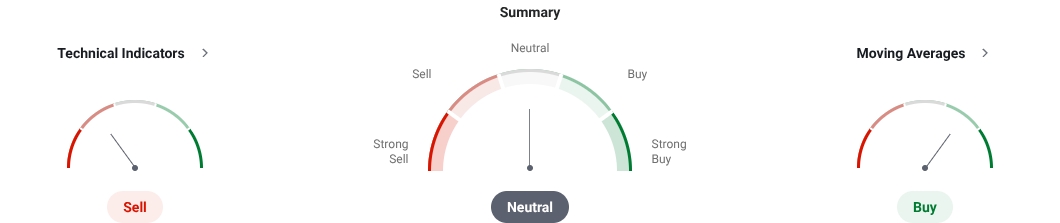
Technical Indicators
| Name | Value | Action |
| RSI(14) | 48.89 | Neutral |
| STOCH(9,6) | 18.84 | Oversold |
| STOCHRSI(14) | 12.04 | Oversold |
| MACD(12,26) | 18.53 | Buy |
| ADX(14) | 34.02 | Neutral |
| Williams %R | -81.88 | Oversold |
| CCI(14) | -46.31 | Neutral |
| ATR(14) | 315.49 | High Volatility |
| Highs/Lows(14) | -12.48 | Sell |
| Ultimate Oscillator | 37.61 | Sell |
| ROC | 7.56 | Buy |
| Bull/Bear Power(13) | -0.718 | Sell |
Source: Investing (22.09.2026)
Moving Averages
| Name | Simple Value | Simple Action | Exponential Value | Exponential Action |
| MA(5) | 1,310 | Sell | 1,362.46 | Sell |
| MA(10) | 1,476.37 | Sell | 1,358.83 | Sell |
| MA(20) | 1,313.66 | Sell | 1,327.53 | Sell |
| MA(50) | 1,289.67 | Buy | 1,371.78 | Sell |
| MA(100) | 1,609.4 | Sell | 1,378.81 | Sell |
| MA(200) | 1,166.53 | Buy | 1,188.83 | Buy |
Source: Investing (22.09.2026)
Pivot Points
| Name | S3 | S2 | S1 | Pivot Points | R1 | R2 | R3 |
| Classic | 1,000.2 | 1,121.1 | 1,249.7 | 1,370.6 | 1,499.2 | 1,620.1 | 1,748.7 |
| Fibonacci | 1,121.1 | 1,216.41 | 1,275.29 | 1,370.6 | 1,465.91 | 1,524.79 | 1,620.1 |
| Camarilla | 1,309.69 | 1,332.56 | 1,355.43 | 1,370.6 | 1,401.17 | 1,424.04 | 1,446.91 |
| Woodie | 1,004.06 | 1,123.03 | 1,253.56 | 1,372.53 | 1,503.06 | 1,622.03 | 1,752.56 |
| Demark | - | - | 1,310.15 | 1,400.83 | 1,559.65 | - | - |
Source: Investing (22.09.2026)
What Is Palladium, and Why Does Its Price Matter?
Palladium (Pd, atomic number 46) is a soft, silvery-white metal belonging to the platinum group metals (PGMs), a family that also includes platinum, rhodium, ruthenium, osmium, and iridium. It is one of the rarest elements in the Earth's crust and is primarily extracted as a by-product of nickel and copper mining rather than from dedicated palladium deposits. Note that this article covers the physical metal palladium; it does not refer to the PLLD cryptocurrency sometimes identified under the same name in search results.
Palladium's price matters because approximately 80% of global demand comes from a single industrial application: automotive catalytic converters. These devices convert toxic exhaust gases — carbon monoxide, hydrocarbons, and nitrogen oxides — into less harmful substances, and palladium acts as the key catalyst in gasoline-engine vehicles. This means that palladium prices move in close alignment with global auto production volumes, emissions regulation stringency, and the pace of the transition away from internal combustion engines.
On the supply side, two countries account for more than 80% of global primary palladium production: Russia (approximately 40%, concentrated in Nornickel's Norilsk operations) and South Africa (approximately 35–40%, via integrated PGM mining complexes). This extreme geographic concentration means that geopolitical events, sanctions, energy crises, and labour disruptions in either country translate directly into price volatility. Palladium's supply concentration is significantly more pronounced than gold, silver, or copper, which are mined across many more jurisdictions.
Palladium also differs from platinum despite their close chemical relationship. Palladium is the preferred catalyst for gasoline engines; platinum is preferred for diesel. The post-Dieselgate shift away from diesel vehicles in Europe — accelerating from 2015 onwards — created a sustained structural demand advantage for palladium over platinum that drove palladium's price above platinum's for the first time around 2018, a reversal that persisted through the 2021 peak.
Key Factors Driving the Palladium Price
Palladium's price is shaped by a specific set of supply and demand dynamics that differ meaningfully from those affecting gold or other precious metals. The principal factors driving the palladium price in 2026 are:
- Automotive catalytic converter demand. Modern gasoline catalytic converters require approximately 80–85 grams of palladium per unit. Major automotive OEMs — including BMW, Ford, and Honda — collectively consume the majority of annual palladium supply through this channel. Tightening emissions standards, including upcoming Euro 7 regulations, increase the palladium loading required per vehicle even as fleet electrification headlines dominate media coverage. Crucially, ICE vehicle sales in India, Southeast Asia, and Latin America continue to grow, partially offsetting demand reduction in advanced EV markets.
- Supply concentration and geopolitical risk. Nornickel's approximately 40% share of global supply means that any disruption to Russian palladium exports — whether through sanctions escalation, logistics restrictions, or operational issues — produces outsized price moves. South Africa contributes a further 35–40%, and that supply faces persistent challenges: Eskom energy load-shedding, labour disputes, and aging mine infrastructure. These structural constraints embed a geopolitical risk premium that acts as a partial price floor even during demand weakness.
- Electric vehicle adoption. The EV structural headwind for palladium is real: battery electric vehicles have no internal combustion engine and therefore require no catalytic converter. However, as of 2026, BEV penetration remains below 20% of new vehicle sales in most major markets. Hybrid vehicles — which retain catalytic converters — are growing faster than pure EVs in many regions. The global on-road fleet replacement cycle spans 15–20 years, meaning the catalytic converter demand base erodes gradually rather than abruptly. The 2022–2024 correction arguably over-discounted EV adoption speed, particularly in emerging markets.
- Palladium recycling. End-of-life catalytic converters are the primary source of secondary palladium supply, accounting for approximately 25–30% of total annual supply. However, recycling volumes reflect vehicles built 10–15 years earlier with lower palladium loadings per converter, creating a long supply-response lag. Recycling acts as a partial but imperfect buffer against mine supply disruptions and is a moderating, not resolving, force for extreme price spikes.
- Platinum substitution risk. At current palladium-to-platinum price differentials, the economic incentive to substitute platinum for palladium in gasoline catalyst formulations is limited but technically feasible. Automakers exploring this substitution represent an additional medium-term bearish factor that credible analysts include in longer-horizon scenarios.
Is Palladium a Good Investment?
Palladium offers several characteristics that attract investors seeking exposure to industrial metals and commodity cycles: rare supply, inelastic near-term demand from the automotive sector, and extreme sensitivity to geopolitical events that can produce rapid price moves in either direction. The 2019–2021 surge from under $1,500 to over $3,000 per ounce, and the subsequent 60%+ correction through 2024, both illustrate the asymmetric volatility profile of this market. Whether palladium is appropriate for a given portfolio depends on an investor's risk tolerance, time horizon, and existing exposure to precious metals and industrial commodities.
The principal investment vehicles for palladium exposure are: physical palladium (bars and coins — including the Canadian Maple Leaf from the Royal Canadian Mint — purchased through LBMA-accredited dealers); ETFs tracking physical palladium, most notably the PALL ETF (Aberdeen Standard Physical Palladium Shares ETF), which is physically backed and trades on major exchanges without requiring physical storage; and mining equities, where Sibanye-Stillwater (NYSE: SBSW), Impala Platinum (Implats), and Anglo American Platinum (Amplats) offer listed exposure to PGM production. Nornickel, despite its approximately 40% global supply share, carries sanctions complexity for investors in Western jurisdictions that requires careful consideration before any equity position.
Palladium prices are unlikely to grow continuously in the absence of supply disruptions or sustained demand acceleration. Investors considering palladium exposure should account for the full range of structural risks described above — particularly the long-term EV transition, platinum substitution feasibility, and the binary nature of Russian supply access — alongside the potential upside from tightening emissions standards and the asymmetric speed of supply-side shocks.
FAQ
What will palladium be worth in 10 years?
Long-term palladium price forecasts vary widely depending on assumptions about EV adoption speed and supply constraints. CoinPriceForecast projects palladium near $2,766 per ounce by year-end 2030 – approximately 112% above current levels – while more bearish scenarios tied to accelerated electrification point to sustained pressure below $1,500.
What are the main factors influencing palladium prices?
The primary drivers are automotive catalytic converter demand (approximately 80% of global palladium consumption), supply concentration in Russia and South Africa (together more than 80% of primary production), electric vehicle adoption pace, palladium recycling volumes from end-of-life converters, and platinum substitution economics.
How does the automotive industry influence palladium prices?
Automotive catalytic converters consume approximately 80% of annual palladium supply, requiring around 80–85 grams per unit. Changes in global ICE vehicle production volumes, tightening emissions standards such as Euro 7, and the geographic mix of auto sales – particularly growth in India and Southeast Asia – all directly affect palladium demand.
Will palladium ever be worth more than gold?
Palladium already exceeded the gold price during 2019–2021, trading above $2,800 per ounce against gold near $1,700–$2,000. A repeat would require a new supply deficit of comparable severity – a scenario that could materialise from Russian export restrictions or a sustained surge in emissions-compliant ICE vehicle production. As of 2026, palladium trades at a significant discount to gold.
What is the short-term palladium price forecast for 2026?
WalletInvestor projects palladium closing December 2026 near $1,300, while Kursprognose forecasts a year-end close around $1,486 – both implying a decline from early-year levels. The range across both forecasters for the remainder of 2026 is approximately $1,149–$1,560 per troy ounce.
Is it better to invest in gold or palladium?
Gold offers greater liquidity, a more diversified supply base, and lower industrial demand concentration, making it a more stable store of value. Palladium offers higher volatility and greater leverage to automotive industry cycles and supply disruptions, which can produce larger short-term gains but also sharper drawdowns. The two metals serve different portfolio functions.
How do geopolitical events affect the palladium market?
Russia accounts for approximately 40% of global primary palladium supply through Nornickel. Any escalation in Western sanctions, Russian export restrictions, or logistics disruptions affecting Russian metal exports can reduce available supply rapidly and trigger sharp price spikes – as observed in early 2022 when palladium briefly touched $3,339. South African power crises and labour action create similar but typically smaller disruptions.
What role does electric vehicle adoption play in the long-term palladium outlook?
Battery electric vehicles eliminate catalytic converter demand entirely, making accelerating BEV adoption a structural bearish headwind for palladium. However, with BEV penetration below 20% of new vehicle sales in most major markets as of 2026, and with hybrid vehicles retaining converters, the demand erosion is gradual rather than abrupt – particularly given the 15–20 year global fleet replacement cycle.
What are the risks of investing in palladium?
Key risks include: high price volatility driven by concentrated supply; long-term structural demand erosion from electric vehicle adoption; platinum substitution in gasoline catalysts; recycling supply increases from high-loading-era vehicles reaching end of life; and geopolitical risks related to Russian and South African supply, including sanctions exposure for Nornickel equity investors.
How does palladium recycling affect its supply?
Palladium recycling – primarily from end-of-life catalytic converters – contributes approximately 25–30% of total annual supply. However, recycled volumes reflect vehicles manufactured 10–15 years earlier with lower palladium loadings per converter, creating a long demand-lag in the supply response. Recycling moderates but cannot fully replace primary mine supply in a disruption scenario.
Disclaimer: The information in this article is not intended to be and does not constitute investment advice or any other form of advice or recommendation of any sort offered or endorsed by Libertex. Past performance does not guarantee future results.
Why trade with Libertex?
- Get access to a free demo account free of charge.
- Enjoy technical support from an operator 5 days a week, from 9 a.m. to 9 p.m. (Central European Standard Time).
- Use a multiplier of up to 1:30 (for retail clients).
- Operate on a platform for any device: Libertex and MetaTrader.