
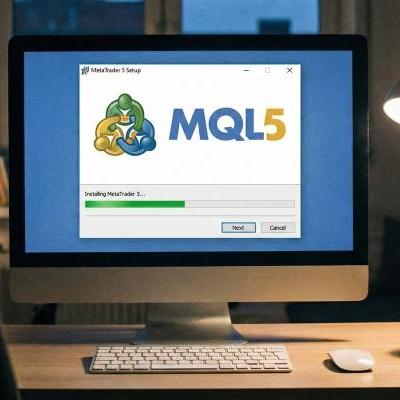
A MetaTrader 5 demo account allows traders to get to know the platform's features without any financial risk. These virtual trading accounts provide access to real-time market data and all MT5 platform features, while trading with virtual capital. Risk-free trading on a MetaTrader 5 account enables traders to develop and test trading strategies before using real capital.
Educational articles
Trading
There are two main types of market analysis: fundamental and technical. Although fundamental analysis is not so complicated a method to predict market moves, there are features you should learn about. An essential feature of fundamental analysis is that it differs in every market. Let's find out what fundamental analysis is.

The term carry trade originates from the financial concept based on profiting from holding (i.e., carrying) an asset. More technically, it's considered a type of interest arbitrage.

Bollinger Bands are commonly used as a tool in technical analysis in a range of financial markets, including forex. It helps understand the market conditions and identify the right moment for entry/exit, which is an essential skill for any trader.

The Alligator indicator is one of the basic trend indicators. Its idea is straightforward, to determine the trend. Bill Williams believed that market players collect most of their profits during strong trends. When Williams was working on the indicator, he followed the presupposition that the financial markets move within the trend just 15% to 30% of the time and in sideways ranges the other 70% to 85%.

If you're new to trading, you may have some questions about where you should begin. With so much information on trading and the stock market in general, getting started can often feel daunting.

Social trading is a relatively new but incredibly useful concept for new traders. It incorporates everything that works about social networking and applies it to trading. By being active on social platforms, you have direct access to experts and the methods they employ. Let's talk about how to use social trading to your benefit.

You may already know about the Dow Jones on the New York Stock Exchange or the FTSE at the London Stock Exchange. These indices are used to gauge the performance of a particular market sector and speculate on it rather than individual stocks. Similarly, the Nikkei 225 is the underlying index of the Tokyo Stock Exchange.

Large companies inevitably affect the entire economy, especially when it comes to the top blue-chip companies.

The FTSE 100 index is one of the most popular choices for traders around the world. It represents the UK's top 100 companies and serves as a measure for the broader UK market.
When you ask traders to name a good technical analysis indicator, whether they're new to trading or seasoned professionals, they'll undoubtedly mention the MACD. It's one of the widely-used indicators that has many advantages.